The Ultimate Guide to Corporate Video Production
Everything you need to know about corporate video production — from planning and budgeting to the production process, distribution strategy, and measuring ROI. A complete guide for businesses of all sizes.
Corporate video production has become one of the most powerful tools in a modern business's marketing and communication arsenal. Research consistently shows that video content drives higher engagement, longer time on page, stronger brand recall, and better conversion rates than any other content format. From internal training and investor communications to public-facing brand campaigns and social media content, professionally produced video can deliver measurable business results across every stage of the customer and employee journey. Whether you're producing your first corporate video or looking to elevate an existing video strategy, this comprehensive guide covers everything — from planning and budgeting through production, delivery, and ROI measurement.
What is Corporate Video Production?
Corporate video production refers to the professional creation of video content designed to achieve specific business objectives. Unlike entertainment films or personal content, corporate videos are strategically planned, scripted, and produced to serve a defined communication goal — whether that means training employees, attracting investors, converting customers, or strengthening brand identity.
What distinguishes professional corporate video production from casual content creation is the level of intentional planning, professional equipment, technical expertise, and post-production craft applied to each piece. A well-produced corporate video is not simply a recording of someone talking to a camera — it is a carefully constructed communication asset designed to be persuasive, credible, and enduring.
Types of Corporate Videos and When to Use Each
Understanding the different types of corporate videos helps you choose the right format for each communication objective. Different formats serve different stages of the business relationship — from attracting new customers to retaining and developing employees.
- ✓Brand Story Videos: Narrative-driven content explaining who you are, what you stand for, and why customers should choose you. Best used on homepage, sales presentations, and investor pitches.
- ✓Product Demonstration Videos: Show your product or service in action, addressing key customer questions and objections. Highly effective for e-commerce and SaaS companies.
- ✓Executive and CEO Messages: Build transparency and trust with stakeholders through direct video communication from leadership. Essential for crisis communications and major announcements.
- ✓Customer Testimonials: Third-party validation from real clients sharing real results. Among the most persuasive content a business can produce.
- ✓Training and Onboarding Videos: Scalable, consistent employee education that reduces training costs, improves knowledge retention, and speeds time-to-productivity.
- ✓Event Coverage: Professional capture of conferences, product launches, and corporate milestones for internal records and external marketing.
- ✓Recruitment Videos: Showcase company culture to attract top talent in competitive hiring markets.
The Corporate Video Production Process — Step by Step
Professional corporate video production follows a structured three-phase process. Understanding each phase helps you collaborate more effectively with your production team and set realistic expectations for timelines and deliverables.
Pre-production is where the majority of the strategic and creative work happens — and where most failed video projects go wrong. This phase includes defining the communication objective and target audience, script development, storyboarding, casting (if needed), location scouting, equipment planning, and full production scheduling. Every hour invested in pre-production saves three hours during the shoot and post-production phases.
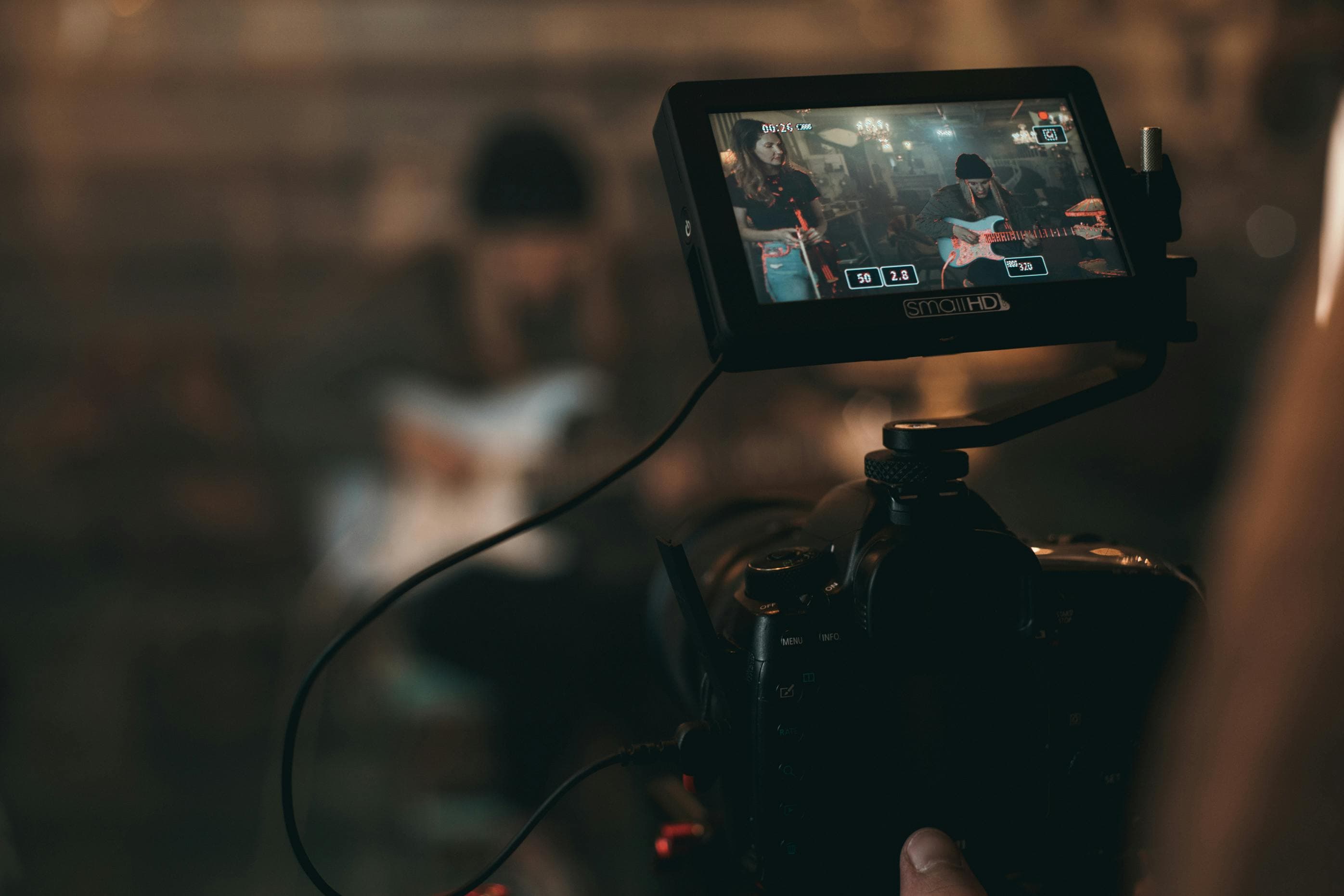
Production is the actual filming. A professional corporate video crew typically includes a director, director of photography (DP), camera operators, lighting technicians, audio engineers, and a production assistant. Professional equipment — broadcast-grade cameras, cinema-quality lenses, professional lighting packages, and directional microphone systems — is non-negotiable for a finished product that reflects well on your brand.
Post-production is where raw footage is transformed into a polished, deliverable asset. This phase includes offline editing (assembling the story from footage), color grading (establishing visual tone and consistency), motion graphics (titles, lower thirds, branded animations), audio mixing and mastering, music licensing, and revision rounds. Most professional corporate productions include 2–3 structured client revision rounds before final delivery.
Planning Your Corporate Video Budget Realistically
Budget planning is one of the most important — and most commonly misunderstood — aspects of corporate video production. The range of possible costs is enormous, determined by crew size, shooting days, location requirements, talent fees, animation complexity, and post-production scope.
For budget planning, corporate video productions typically fall into three broad tiers: Entry-level productions ($2,000–$8,000) suit simple testimonials, basic explainer videos, or single-day internal communications shoots with minimal post-production. Mid-range productions ($8,000–$30,000) cover most professional corporate needs — polished brand films, multi-day product shoots, animated explainer videos, and professional event coverage. High-end productions ($30,000+) are reserved for broadcast commercials, large-scale multi-location content campaigns, or complex animation and VFX projects.
- ✓Define your objective before discussing budget — a training video has fundamentally different production needs than a TV commercial.
- ✓Factor in distribution costs: paid promotion, platform fees, localization, and updates are separate from production.
- ✓Prioritize quality over quantity — one excellent video outperforms five mediocre ones in every metric.
- ✓Always request itemized quotes so you understand exactly what is and isn't included.
Tips for a Successful Corporate Video Shoot
Even with a skilled production team, the success of any corporate video shoot depends significantly on preparation and on-set decision-making. Here are the practices that consistently separate outstanding productions from disappointing ones.
Always conduct a thorough location scout before the shoot day. Check for ambient noise sources, natural and artificial lighting conditions, background visual elements, power access, and logistics. Nothing derails a corporate video production like discovering a noisy HVAC system, an awkward background, or inadequate power access on the day of the shoot.
If your video involves on-camera executives, employees, or spokespeople, invest in brief media training before the shoot. Authenticity matters, but so do clarity, confidence, and pacing on camera. A 30-minute coaching session can transform a nervous interviewee into a compelling, credible on-screen presence — and save hours of post-production editing around stumbles and retakes. Always build buffer time into your shooting schedule: corporate video shoots almost always run longer than planned.
Distribution: Making Your Corporate Video Work Harder
A professionally produced corporate video delivers value only when it reaches the right audience. Distribution strategy should be planned during pre-production — not after the video is delivered.
For external marketing, optimize video for each platform: YouTube requires keyword-rich titles, descriptions, chapters, and tags; LinkedIn video drives strong B2B engagement and thought leadership positioning; homepage hero videos significantly increase time-on-site and reduce bounce rates; paid social video ads on Meta, YouTube, and LinkedIn deliver measurable conversion ROI when properly targeted and A/B tested.
For internal use, host training and onboarding videos on your company intranet or Learning Management System (LMS). Track completion rates and quiz scores to measure knowledge transfer effectiveness. For investor and board communications, use password-protected private hosting to ensure secure, controlled access.
Final Thoughts
Corporate video production is one of the highest-ROI content investments a business can make when executed with strategic intent and professional production quality. A well-crafted video serves your business for years across multiple platforms, audiences, and business objectives — from attracting customers to training employees to building investor confidence. Teckviz brings over a decade of broadcast-quality production expertise to every corporate video engagement, from concept development through final delivery and distribution strategy. Our team of directors, cinematographers, and editors has produced content for major TV networks, international brands, and mission-driven organizations across the USA, UAE, and globally. If you're ready to create corporate video content that delivers real, measurable business results, we'd love to hear about your project.
Frequently Asked Questions
How long should a corporate video be?+
Do I need professional actors for my corporate video?+
Can we use music in our corporate video?+
How do we measure the ROI of a corporate video?+
Ready to Work With Teckviz?
Whether you need video production, web development, or digital marketing — our team is ready to deliver exceptional results.